BMD16N (version 1.2)
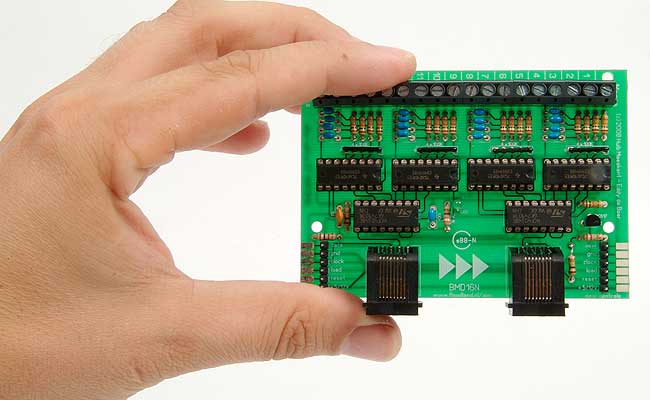
The BMD16N is an improved feedback decoder for the S88-bus. There is also a version of the BMD16N with integrated current detection: the BMD16N-SD. Both decoders use RJ-45 connectors and network cables for the S88-bus and they are fully compatible with the s88-N standard. The BMD16N can be used with all other S88 and s88-N decoders and equipment. The board has been developed in dialogue with one the initiators of s88-N, Wolfgang Kufer. More information on s88-N can be found on his website. Or take a look at s88-N.eu.
BMD16N advantages
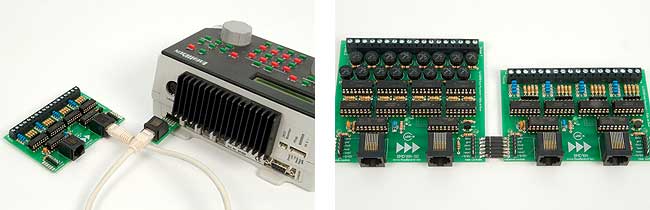
The BMD16N has several advantages over many other S88 decoders. If you mount BMD16N decoders directly next to each other, a simple print connector or a few wires is all you need to connect the decoders. That will save you cables and money. The BMD16N also features an improved reset circuit. This eliminates possible errors even further.
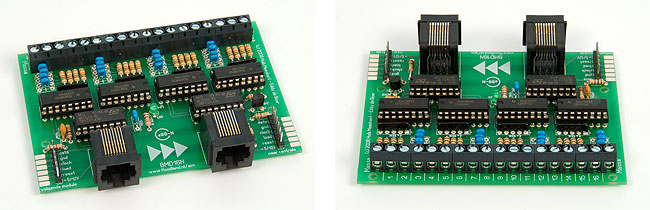
The BMD16N has 16 contacts that react when connected to the ground terminal of your layout. This is the case when you use the decoder for occupancy detection on a 3-rail layout. But also if you prefer reed contacts or special contact tracks. The BMD16N will also come in handy when you set out to create a layout plan track control to work with a computer. The switches on the track control are connected to the BMD16N and via the S88-bus relayed to your system.
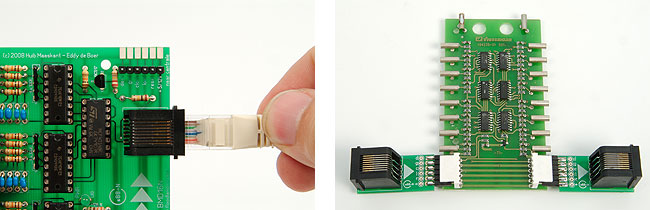
The big advantage of the BMD16N is the use of standard network cables to connect the S88-bus. Network cables are a lot cheaper than the standard S88 cables and are not as sensitive for electrical interference. You can connect the network cables directly to your central unit with the s88-N adapter. The adapter will also help you to connect older decoders to s88-N. The BMD16N is fully compatible with all other equipment with the s88-N logo.
Building the BMD16N
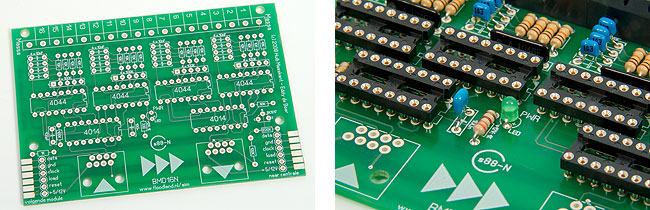
The BMD16N is a do-it-yourself project. The professional boards are being produced in one of the top facilities in Europe. You can order them via the order form. The table lists the part numbers for Conrad. Alternative sources are Reichelt, Farnell and eBay. They are all standard components. The board comes with a printed manual that will guide you step by step.
| Parts | |||
| Count | Description | Conrad | Reichelt |
| 1 | resistor 330 Ohm* | 1417730 | 1/4W 330 |
| 17 | resistor 10 kilo Ohm | 1417697 | 1/4W 10K |
| 2 | resistor 100 kilo Ohm | 1417735 | 1/4W 100K |
| 1 | resistor 220 kilo Ohm | 1417665 | 1/4W 220K |
| 4 | resistor network 4 x 100 kilo Ohm | 416053 | SIL 5-4 100K |
| 16 | capacitor 10nF | 453323 | KERKO 10N |
| 1 | capacitor 100nF | 453358 | KERKO 100N |
| 1 | LED 3 mm* | 184713 | LED 3MM GN |
| 1 | transistor BC517 (or BCX38C) | -- | BC 517 |
| 6 | 16 pin IC socket** | 189529 | GS 16 |
| 4 | IC 4044 | -- | MOS 4044 |
| 2 | IC 4014 | -- | MOS 4014 |
| 6 | 3-pole screw connector | 731891 | AKL 101-03 |
| 1 | connector strip | 741119 | SL 1X36G 2,54 |
| 2 | RJ45 western connector | 716148 | MEBP 8-8S |
* Optional power LED.
** Only needed if you want to mount the ICs in sockets (recommended).
Check this overview for the parts too.
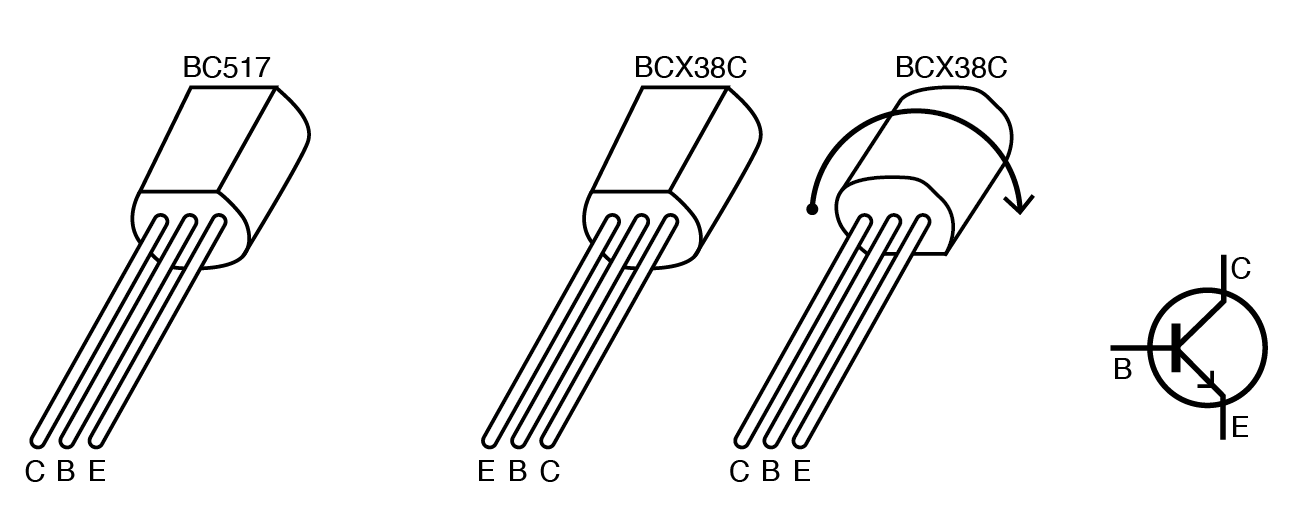
Please note the BCX38C! This alternative to the BC517 needs to be mounted the other way around!
Connecting to S88 and s88-N
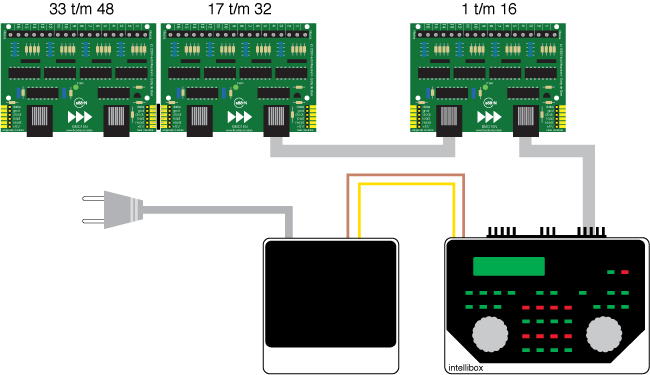
The feedback decoders are connected to the central unit as a chain. The order of the decoders determines how the contacts are numbered. The first decoder has contacts 1 to 16, the second one 17 to 32, etc. You can connect up to 31 decoders with 16 contacts to the S88-bus.
Connecting the contacts
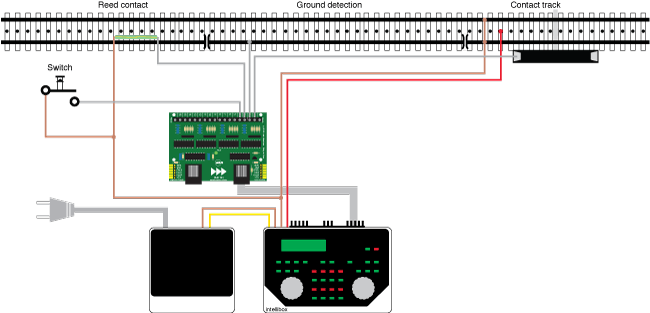
If you own a 3-rail layout, you will probably use the BMD16N for occupancy detection via ground detection. This is by far the easiest and most reliable way to know where your trains are. You could also use reed contacts or special contact tracks, but these are less reliable and they do not generate a permanent signal for an occupied track. You cannot use these options to detect e.g. a car left behind. Furthermore, you can connect ordinary switches to the BMD16, for example for a layout plan track control or a emergency stop switch.
The BMD16N and LocoNet

The BMD16N is not a LocoNet decoder and cannot be connected directly to a LocoNet infrastructure. But with the LocoNet-S88-Adapter from Uhlenbrock (cat. nr. 63880) you can. Each Adapter can accommodate up to 31 BMD16N and BMD16N-SD decoders. You can connect mutiple Adapters to the same LocoNet, which means the number of decoders is virtually unlimited. You connect the decoder with the Adapter through either a standard S88 cable or a s88-N adapter and a network cable. Unfortunately the adapter is currently out of production, but a similar solution can be ordered from Rosoft (called the s88LN).
Testing
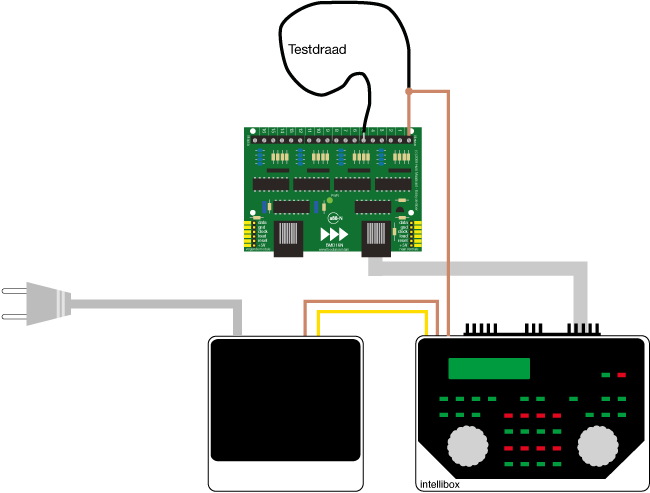
The BMD16N can be tested with a simple wire. Connect the decoder to the S88-bus of your central unit and call up the menu that displays the status of the feedback decoders. Connect the ground terminal of the central unit with the ground terminal of the decoder. Touch each of the outputs with a ground wire and check if the feedback status changes to occupied.
Please note: The BMD16N - and every other S88 feedback encoder without optocouplers - cannot be used with the DR4088RB from Digikeijs. The R-BUS of the central unit could be damaged if you do.
Boards are available from the shop.
2008, 2012, 2018
BMD16N Features
Improved feed back decoder with 16 contacts for the S88-bus
Suited for all model railroads, gauge II to Z
Compatible with a.o. Märklin Digital, Uhlenbrock Intellibox, ESU ECoS and LDT HSI-88
Compatible with the s88-N standard and all other s88-N equipment
Connect the S88-bus via standard S88 cables or reliable network cables
Other BMD16N/BMD16N-SD decoders can be directly connected sideways
Even further reduced risk of errors thanks to improved reset circuit
Sturdy screw connectors
Easy to assemble for everyone with some soldering experience
Extensive printed manual with step by step assembly plan
Already thousands in use around the world
Download
Download the BMD16N manual as PDF.
